
Pāṇḍava Jātaka
Pāṇḍava Jātaka
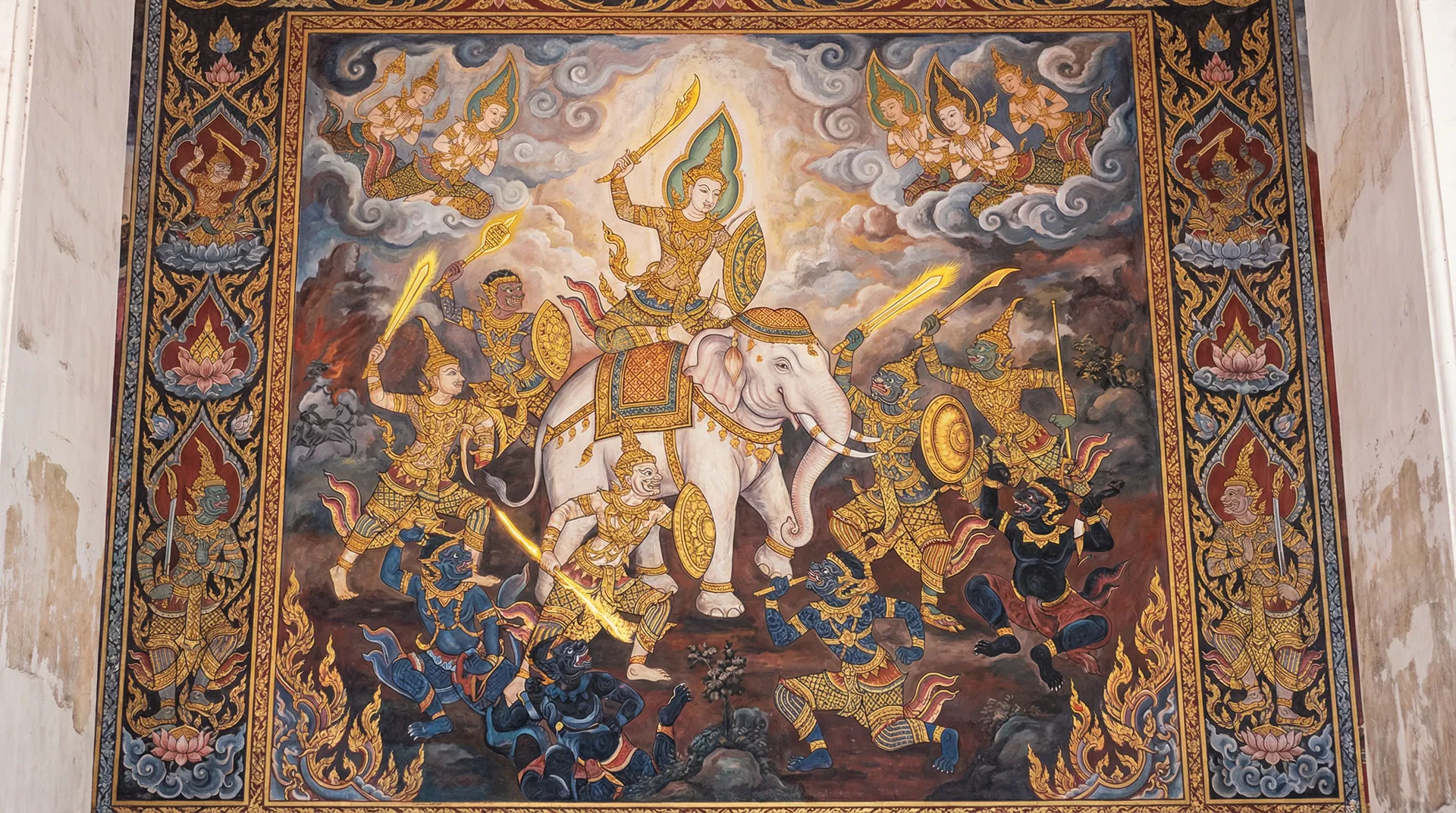
In a forgotten era, when the world was young and the gods walked among mortals, there stood a magnificent kingdom ruled by a just and virtuous king. This king, known for his wisdom and his deep understanding of the cyclical nature of existence, had once been born as a Bodhisattva, a being destined for enlightenment. In that life, he was a wise and powerful king named Pāṇḍava, ruler of a prosperous land teeming with life and abundance.
King Pāṇḍava was blessed with four sons, each as noble and righteous as the next. They were learned in the scriptures, skilled in the arts of governance, and deeply devoted to their father and his teachings. The king loved his sons dearly, and he took great care in nurturing their understanding of the Dhamma, ensuring they would be wise rulers in their own right.
However, the kingdom was surrounded by envious neighbors, rulers who coveted Pāṇḍava's prosperity and feared his wisdom. Among them was a particularly ambitious and wicked king named Vesa-mantara, who harbored a deep-seated hatred for Pāṇḍava and his kingdom. Vesa-mantara was a master of deception and treachery, his heart consumed by greed and a lust for power.
One day, Vesa-mantara devised a cunning plan to seize Pāṇḍava's kingdom. He knew that direct conquest would be met with fierce resistance. Instead, he chose a path of insidious manipulation. He sent spies into Pāṇḍava's court, men who were skilled in spreading rumors and sowing discord. These spies worked tirelessly, whispering lies about King Pāṇḍava, exaggerating his perceived weaknesses, and subtly turning the hearts of some of his courtiers against him.
They planted seeds of doubt, suggesting that the king was growing old and his sons were eager to usurp his throne. They fueled petty jealousies and amplified minor disagreements, creating an atmosphere of distrust and unease within the palace.
King Pāṇḍava, with his profound insight, soon perceived the subtle machinations of Vesa-mantara. He saw the fear and suspicion creeping into the hearts of his own people, the unintended consequence of the enemy's whispers. He understood that true strength did not lie in brute force, but in maintaining the purity of one's own mind and the righteousness of one's actions, even when faced with external malice.
He called his four sons together and addressed them with a calm and resolute demeanor. "My beloved sons," he began, his voice carrying the weight of ancient wisdom, "our kingdom is threatened not by swords and armies, but by the insidious poison of deceit. Our enemies seek to divide us, to make us turn against one another. They spread lies and foster distrust, hoping to weaken us from within."
He continued, "Remember the teachings of the Dhamma. Do not allow yourselves to be swayed by baseless rumors or unfounded suspicions. Cultivate unwavering faith in truth and righteousness. The greatest weapon against deception is not anger or retaliation, but steadfast integrity and a clear conscience."
He then revealed Vesa-mantara's plot to his sons, explaining the methods of the spies and the ultimate goal of their enemy. He instructed them on how to discern truth from falsehood, how to remain calm in the face of provocation, and how to strengthen the bonds of loyalty and trust within the kingdom.
The four princes, embodying the virtues of their father, listened intently. They vowed to uphold the Dhamma and to protect their kingdom from the insidious attacks of Vesa-mantara. They worked together, using their father's wisdom as their guide. They addressed the people with honesty and clarity, exposing the lies of the spies and reaffirming their commitment to justice and unity.
When Vesa-mantara learned that his plot had been foiled, he was enraged. He realized that his attempts at manipulation had failed to break the king's spirit or the loyalty of his people. He had underestimated the power of truth and the strength of a virtuous ruler and his righteous sons.
Instead of resorting to open warfare, which he knew would be futile against Pāṇḍava's well-defended kingdom, Vesa-mantara was forced to retreat, his plans in disarray. He remained a threat, lurking on the borders, but he could not penetrate the fortress of integrity that King Pāṇḍava and his sons had built within their hearts and their kingdom.
King Pāṇḍava, having successfully navigated the treacherous currents of deceit, continued to rule with wisdom and compassion. He taught his sons that the greatest victories are not won on the battlefield, but in the steadfast adherence to truth and righteousness, even when surrounded by falsehood and malice. The kingdom of Pāṇḍava flourished, a testament to the power of inner strength and unwavering virtue in the face of external adversity.
— In-Article Ad —
💡Moral of the Story
Steadfast integrity, truthfulness, and unwavering loyalty are the strongest defenses against deceit and malice. Inner strength can overcome external threats.
Perfection: Truthfulness (Sacca)
— Ad Space (728x90) —
More Jataka Tales You May Enjoy
 522Mahānipāta
Ghata Jataka
Ghata JatakaIn a time long past, when the Bodhisatta was born as a wise and exceptionally strong pot...
💡 True strength is not measured by outward displays of force or arrogance, but by inner fortitude, skill, integrity, and the quiet power of diligence and honest work.
 253Tikanipāta
Kusa-Jātaka
Kusa-JātakaIn the kingdom of Kampilla, nestled beside the sacred River Ganges, lived a king named Ud...
💡 Jealousy and hasty judgments can lead to terrible suffering and separation. True love is tested by adversity, and forgiveness is essential for healing and reconciliation. Patience, inner strength, and understanding are virtues that can overcome even the most profound injustices.
 132Ekanipāta
Kuddala Jataka
The Tale of the Weaver's Son Long ago, in the bustling city of Savatthi, renowned for its vibrant ma...
💡 A truly prosperous kingdom is one where the well-being of its poorest citizens is a priority, and where systematic compassion is integrated into governance.
1EkanipātaThe Tale of the Great Lotus
The Tale of the Great Lotus In a time long past, when the world was a canvas of verdant forests and...
💡 Impatience is like a fire that burns everything, but wisdom and concentration are the tools that allow us to control situations and achieve goals with stability.
32EkanipātaThe Bodhisatta as a Compassionate King
The Bodhisatta as a Compassionate KingIn the prosperous kingdom of Avanti, renowned for its fertile ...
💡 True leadership is defined by profound compassion, and tending to suffering with kindness can overcome calamities.
251TikanipātaNandiya-Jātaka
Nandiya-JātakaIn the heart of a lush forest, where ancient trees whispered secrets to the wind and s...
💡 True fulfillment and lasting happiness are found not in worldly possessions or power, but in detachment, simplicity, and the pursuit of spiritual enlightenment. The greatest leadership is often demonstrated through selfless sacrifice and the courage to follow one's highest calling.
— Multiplex Ad —